


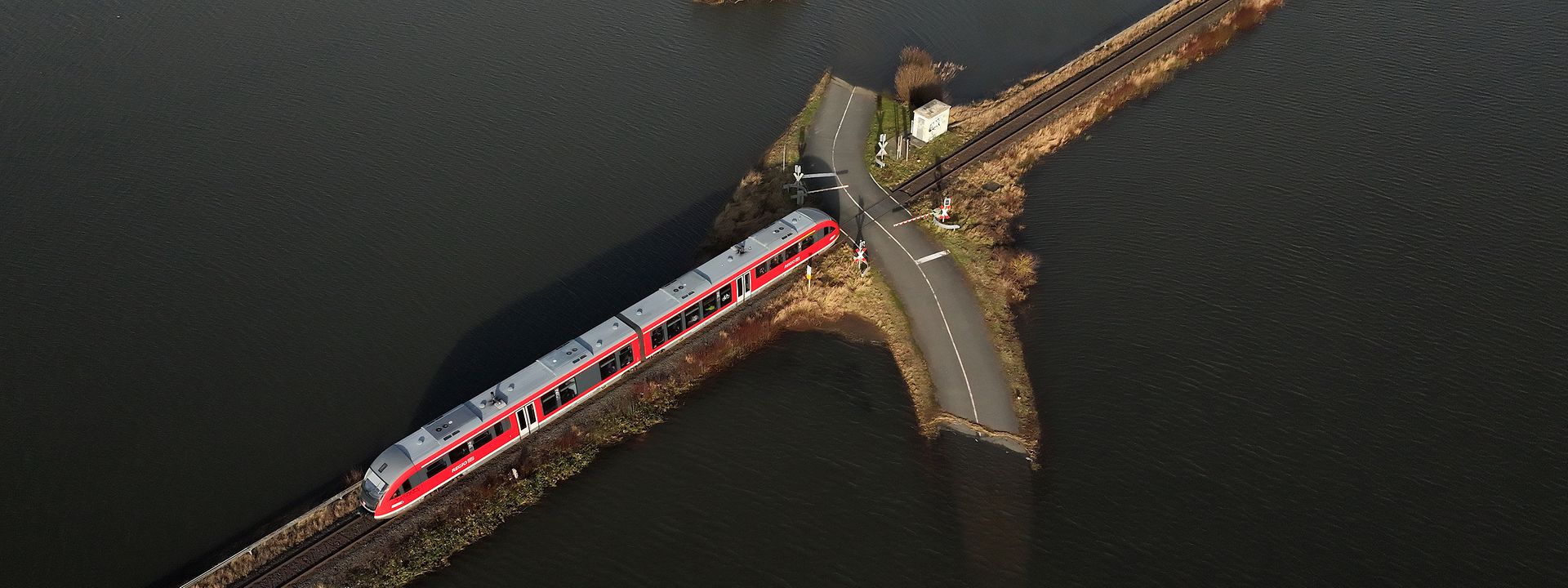
Climate resilience at Deutsche Bahn
As an operator of critical infrastructure and a large-scale organization, Deutsche Bahn is particularly affected by the current and future impacts of climate change. That is why DB is preparing intensively for increasing extreme weather events and is further developing its climate resilience management both strategically and operationally.
By acting with foresight and proactivity, DB is complying with regulatory requirements. With its resilience management, DB is focusing on safer infrastructure, more resilient buildings, more reliable vehicles, and protecting its customers and employees from the consequences of climate change.
Analysis of climate scenarios
One of the foundations of effective climate resilience management is a sound risk analysis. That is why the Potsdam Institute for Climate Impact Research (PIK) was commissioned by Deutsche Bahn to examine climate change in Germany up to 2060 and its expected impact on DB's rail infrastructure using climate scenarios from the Intergovernmental Panel on Climate Change.
The results indicate that significantly more hot days and fewer harsh winters are expected. At the same time, the intensity of individual extreme weather events will continue to increase. The studies also provided detailed forecasts of the climatic impacts in all DB InfraGO transport regions.
In addition, Deutsche Bahn uses climatological data from sources such as the German Weather Service as a basis for its own analyses in its business areas. The data set comprises more than 80 indicators and provides detailed insights into regional climate change impacts.
The findings of the PIK studies form the basis for further climate risk assessments within the Group. In doing so, DB follows the recognized methodology of the BMV research network. This consists of the core elements of exposure, sensitivity, and criticality analysis. This provides Deutsche Bahn with a scientifically sound basis for assessing climate-related risks and developing appropriate measures.
Climate-Resilient Railway Technology Program
As part of its Climate-Resilient Railway Technology Program, Deutsche Bahn has conducted climate risk analyses for various DB facilities. These analyses form the basis for the development of targeted and effective adaptation measures to make vehicles, infrastructure, and buildings more technically resilient. Based on the analyses, pilot projects were launched for certain facilities and historical weather and incident data was evaluated in more detailed studies.
Adapting to climate change
DB InfraGO works with its own natural hazard management team to limit the consequences of extreme weather events as much as possible. Specifically, DB wants to reduce the risks posed by storms, extreme temperatures, and heavy rainfall.
Increased safety at stations
DB InfraGO is also working on the development of climate-resilient station environments. The aim is to increase passenger comfort and safety and improve the resilience of stations to extreme weather events. In cooperation with local authorities, the aim is to create livable and climate-adapted public spaces.
In order to reduce the vulnerability of stations and train stops, concrete measures were tested in pilot projects, including climate-adapted planting and the use of permeable soils.

Vegetation management
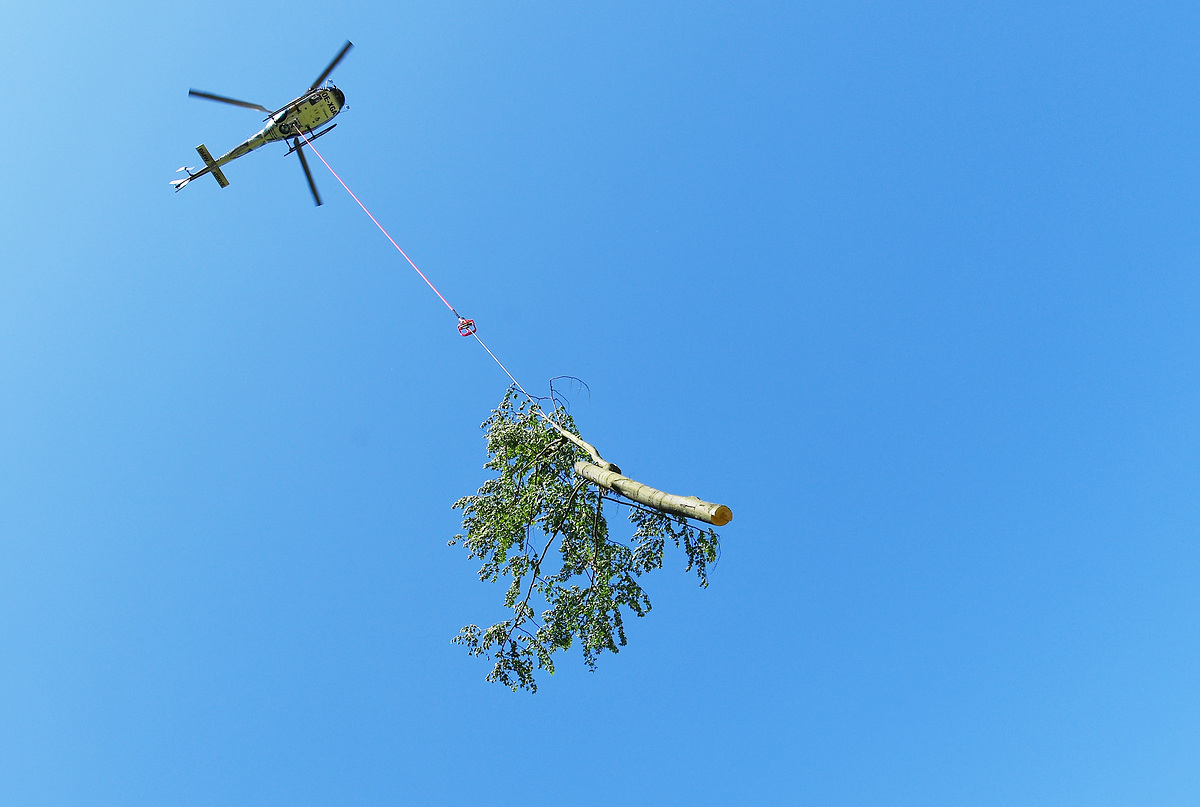
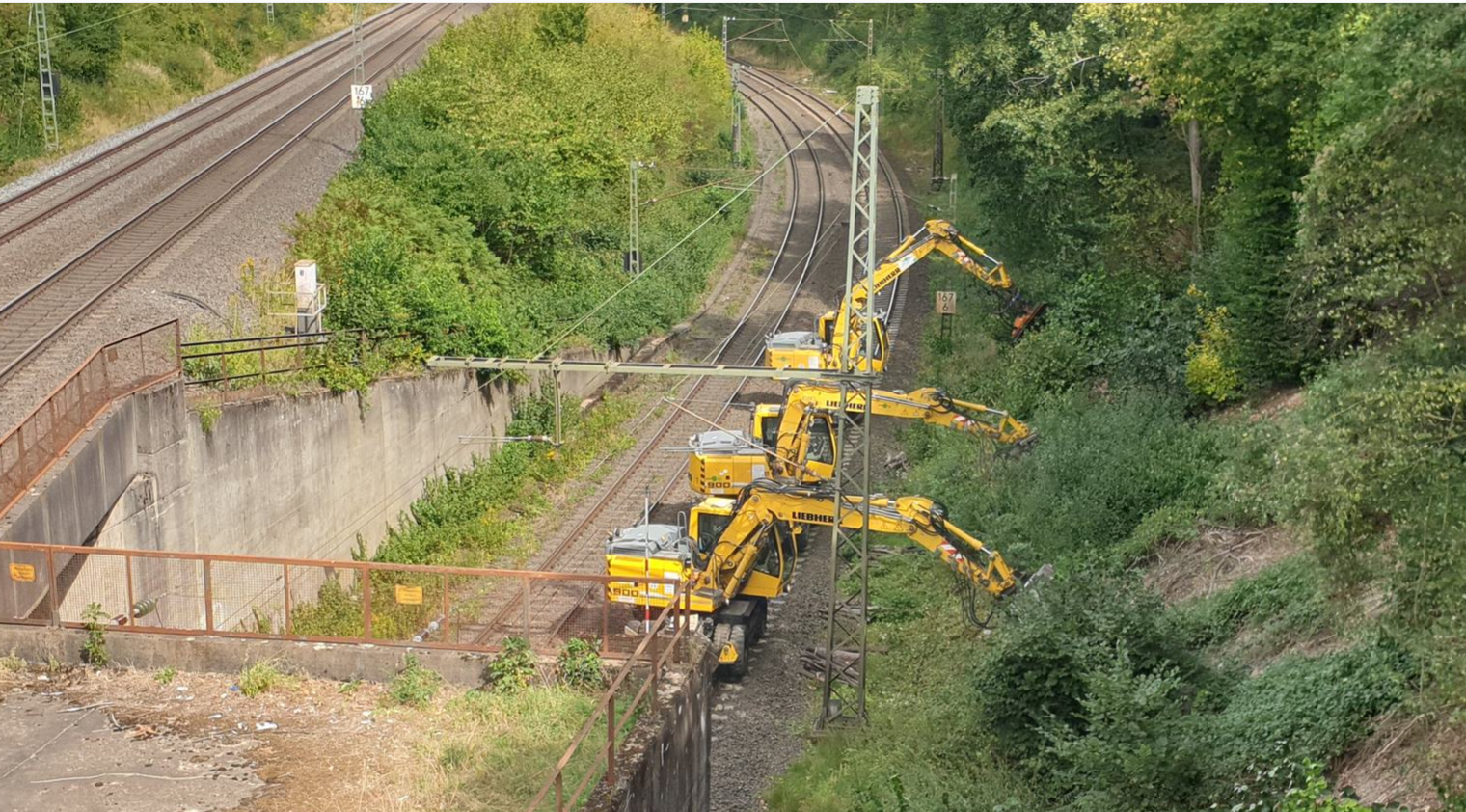
The safety of passengers is a top priority for Deutsche Bahn. Bushes and trees along the tracks are therefore removed to reduce the risk of broken branches and fallen trees, for example due to storms or heavy snowfall. DB pays attention to environmental protection and nature conservation so that birds and mammals are not disturbed during their breeding and nesting seasons if possible.
The cuttings produced during vegetation management are returned to nature as biomass. Usable wood is marketed as logs or wood chips. The remaining trunks and branches are deposited at a safe distance from the tracks, creating a valuable habitat and refuge for smaller animals.
 Go
Go