


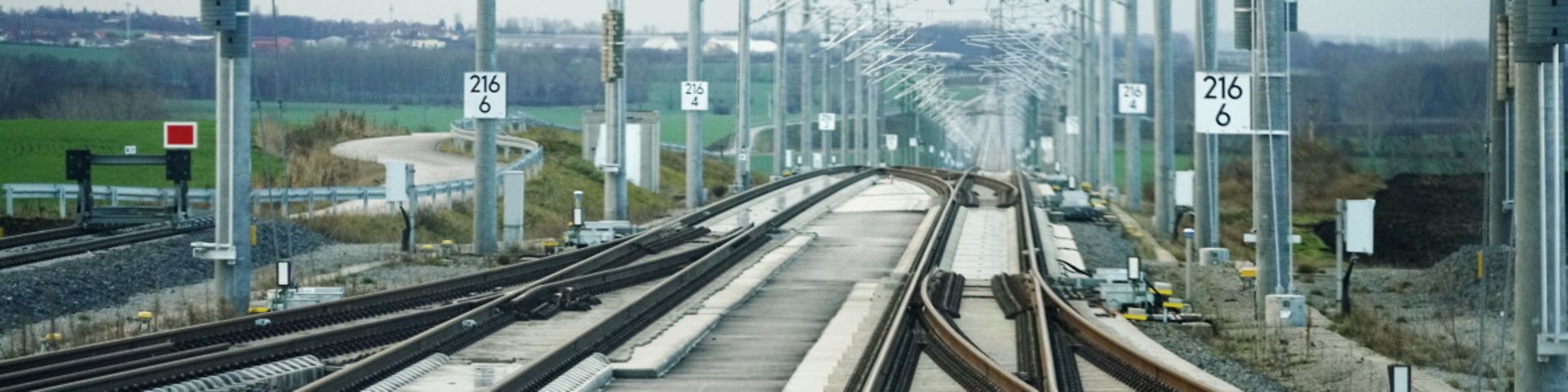
Article: Smart Infrastructure
Maintenance on Germany's some 33,000 kilometer railway network is highly complex. It used to be impossible to predict when components or systems would fail and need to be serviced or repaired. DB is now increasingly able to gain more information thanks to smart sensors and artificial intelligence, which make predictive maintenance possible.
Smart solutions like these have the potential to reduce disruptions to operations in the network, which are responsible for around one-third of all delays.
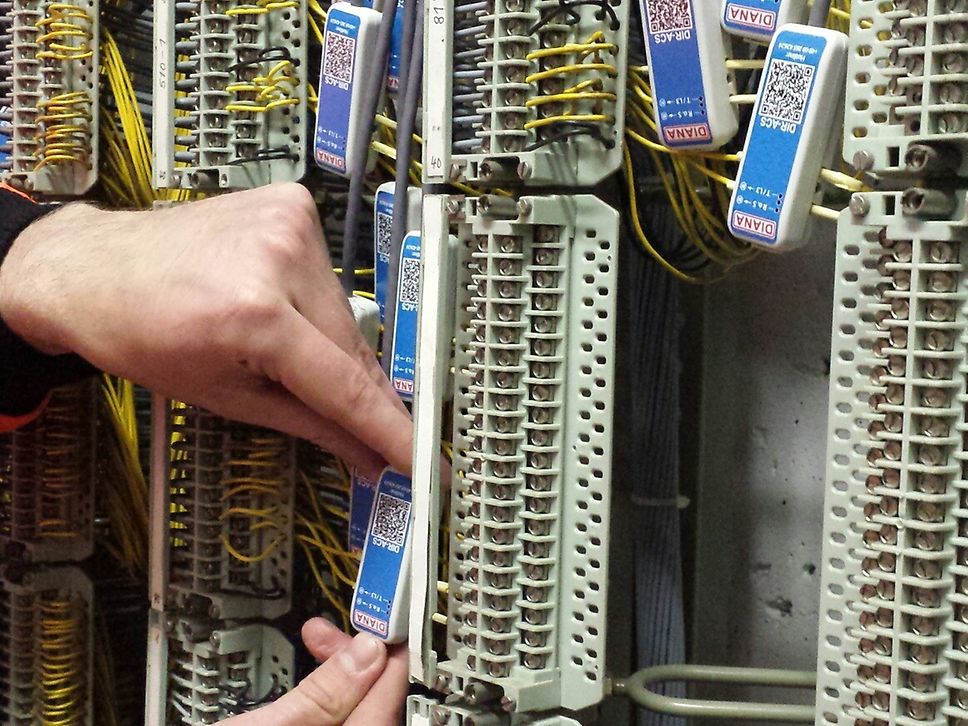
Smart switches: DIANA
Thanks to the diagnostics and analysis platform (DIANA), DB is now connecting its switches to a switch heart monitor. Sensors report whenever something is wrong with switch turnout. This is visible from the power consumption. If the curve looks different than normal, maintenance technicians can identify even the smallest signs of a deviation on the screens of their mobile and stationary terminal devices at a very early stage. This makes it possible to cut faults with switches by up to 50%, which translates into better quality and punctuality. By may 2020, 28,000 switches will be equipped with switch drive diagnostics and connected to DIANA. Looking forward, the platform offers numerous further opportunities for diagnostics applications.
KONUX: perfect bearer positioning for fast trains
KONUX, a startup established at the Technical University of Munich in 2014, has been working with Deutsche Bahn on getting a system for measuring and analyzing the bearer displacement in high-speed transport ready for series production. Displacement refers to space in the ballast underneath the bearer. If the load of trains traveling on the tracks cause ties to sink too much, more ballast needs to be added.
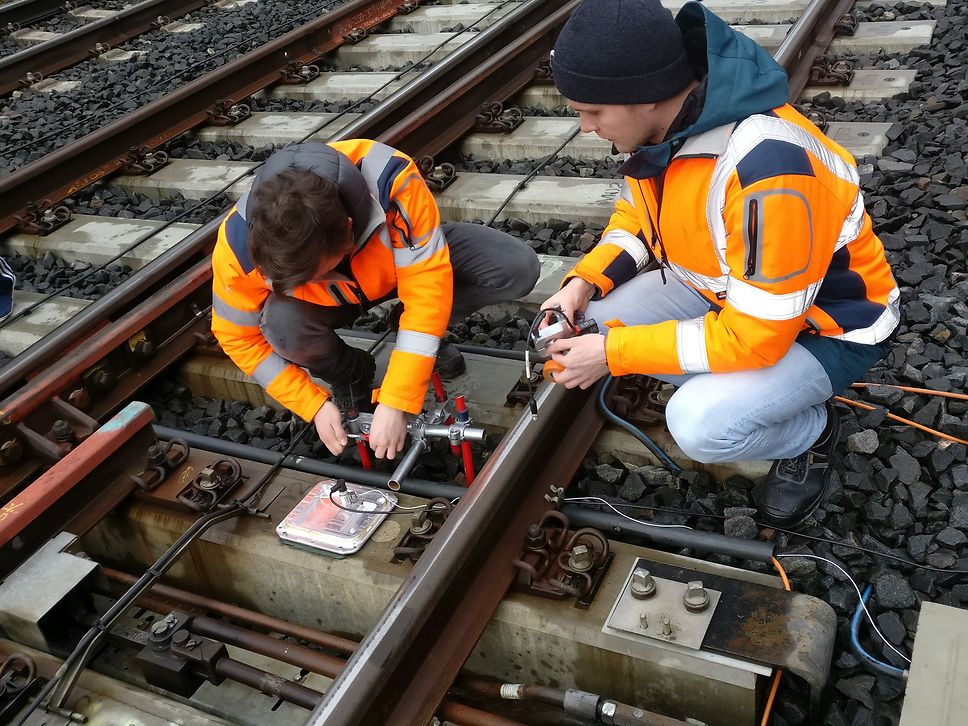
In the future, KONUX sensors will be able to take measurements at switches where trains pass through at over 160 km/h. The analysis algorithms used will detect different fault patterns and monitor the impact of trains and rails directly at the tie. The startup has also enhanced its system so that KONUX and DIANA data can be combined and environmental data, such as temperature, can be added. The idea is for new algorithms and artificial intelligence in the "Smart Point" system to identify and predict most switch failures. The system evaluates the health condition of switches using a number of parameters, such as vibration, motor current, and switch heater temperature, and uses vibration and additional train data to evaluate the dynamic impact of wear on switches caused by trains. Looking at the switch as a complete technical system makes it possible to plan extensive predictive maintenance and contributes to reliable, on-time rail operations. Using the innovative DIANA and KONUX solutions could prevent up to 10% of disruptions in the rail network.
Fiber Optic Sensing
Fiber optic sensing (FOS) makes sure that DB has its ear to the ground, or more specifically, to the tracks. Fiber optic sensors work a little like a microphone that records noise along a rail line using optical fibers. Light pulses are sent along fiber optic cables next to the line – around 2,500 per second over a distance of 40 kilometers. Sound waves, such as those produced by a train, cause micro distortions in the fiber optic cables, which deflect the light. These light deflections are compared with acoustic fingerprints of different types of influence, which are stored in a database. It is possible to determine what happened and where, down to ten meters. FOS will make it possible for DB to better handle external influences such as cable theft and landslides at an even earlier stage. What's more, the data provides information about the condition of the infrastructure, rolling stock, and the location and speed of trains. And that information not only helps with predictive maintenance; it can also be used for customer information and travelling comfort.
 Go
Go