


Together with its partners, Deutsche Bahn is developing and testing alternative propulsion technologies for the transport of tomorrow — for example, the use of "green" hydrogen.
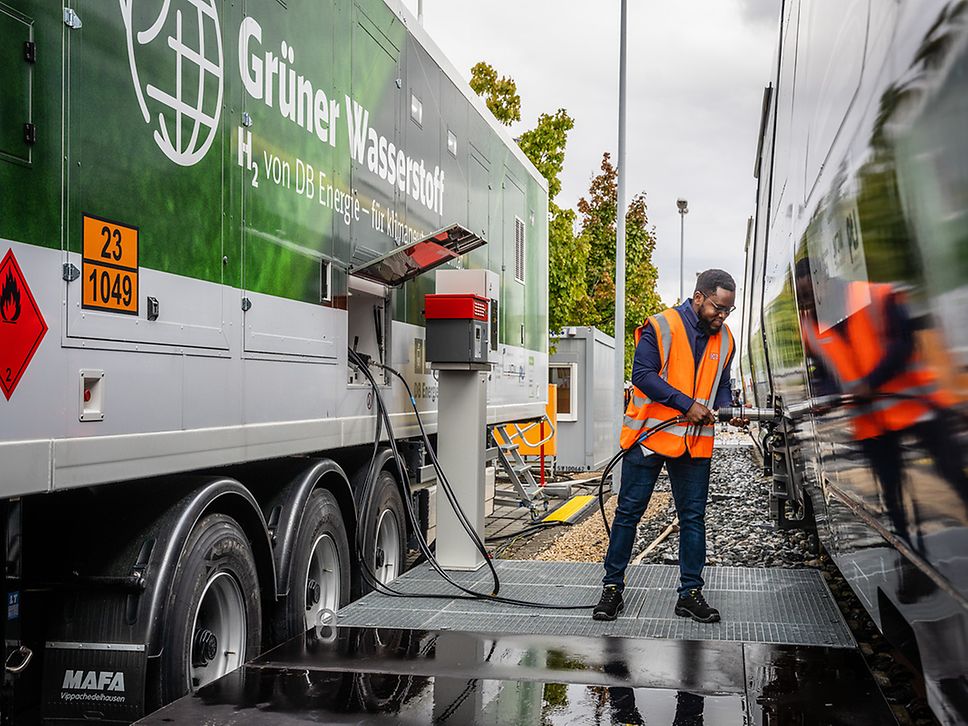
Mobile refueling infrastructure
To test hydrogen supply for trains, DB Energie developed a solution including a mobile hydrogen refueling station. "Green" hydrogen is produced on-site using renewable electricity, stored in a mobile tank, and conditioned and cooled in an adjacent tank trailer before refueling. Communication between train and station allows pressure-controlled refueling tailored to the vehicle, ensuring optimal refueling time and rapid return to service.
Using this infrastructure, DB Energie won a tender from Bayerische Regiobahn (BRB) and now supplies a Bavarian hydrogen train with "green" hydrogen. A hydrogen station and mobile storage trailer were built in Augsburg. The two-part hydrogen train began passenger service at the start of 2024.
Innovation Hub provides renewable electricity directly to the overhead line
At the Tübingen Innovation Hub, DB Energie also tests other future energy supply technologies. A key focus is a technical interface to the overhead line: the so-called sector coupler connects the hydrogen production system with the overhead line and a battery storage unit, allowing renewable energy to be fed directly into the traction power network. This helps DB learn how to respond flexibly to “dark doldrums” — days with little sun or wind, resulting in insufficient renewable electricity production.
Hydrogen fleet in regional train transport
Together with the Rhein-Main-Verkehrsverbund (RMV), DB subsidiary “start” has been operating the first trains of a new hydrogen-fleet in Hessen since December 2022. The Alstom Coradia iLint trains use a hydrogen fuel cell to generate electricity for propulsion. The trains emit only water vapor and heat into the local environment.
Initially, the hydrogen trains ran on four partially non-electrified routes in the “Taunus subnetwork” of the Rhein-Main area. Some trains were temporarily replaced in 2025 by conventional diesel locomotives due to technical adjustments needed for the fuel cells. After revision, the entire hydrogen fleet is planned to return to service.
Hydrogen buses at DB Regio
In North Frisia around Niebüll and Husum DB subsidiary Autokraft operates seven hydrogen fuel cell buses in a pilot project, called “eFarm.” The buses, from Portuguese manufacturer CaetanoBus, have a range of up to 400 kilometers and are refueled with "green" hydrogen produced from excess wind power at public stations.
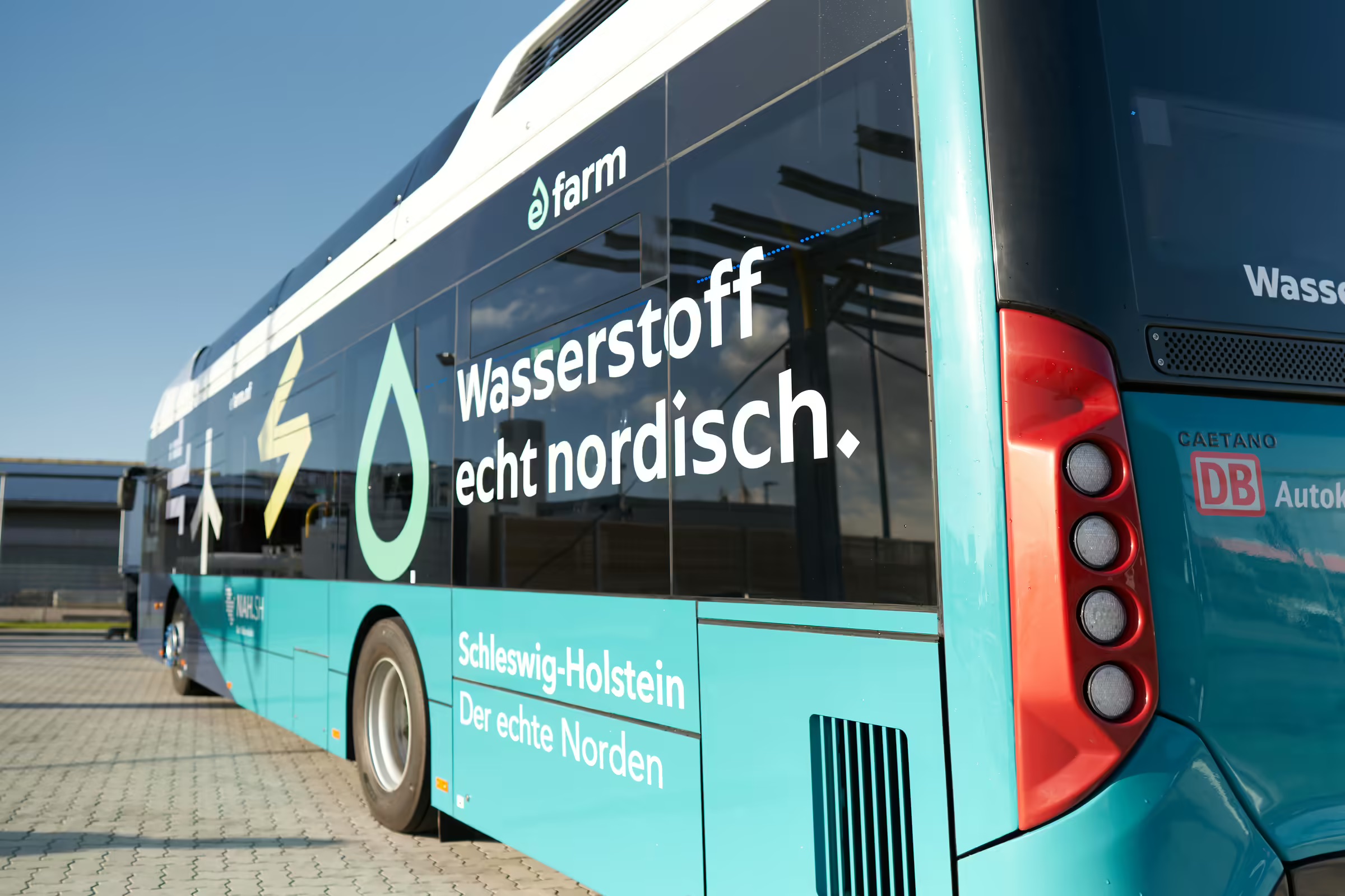
In Friesland county, five hydrogen buses also bring travelers to their destination. DB subsidiary Weser-Ems-Bus manages procurement, operation, and maintenance. Refueling occurs at a hydrogen station in Schortens.
 Go
Go